Kombucha, Pomegranate, and Detoxification Pathway
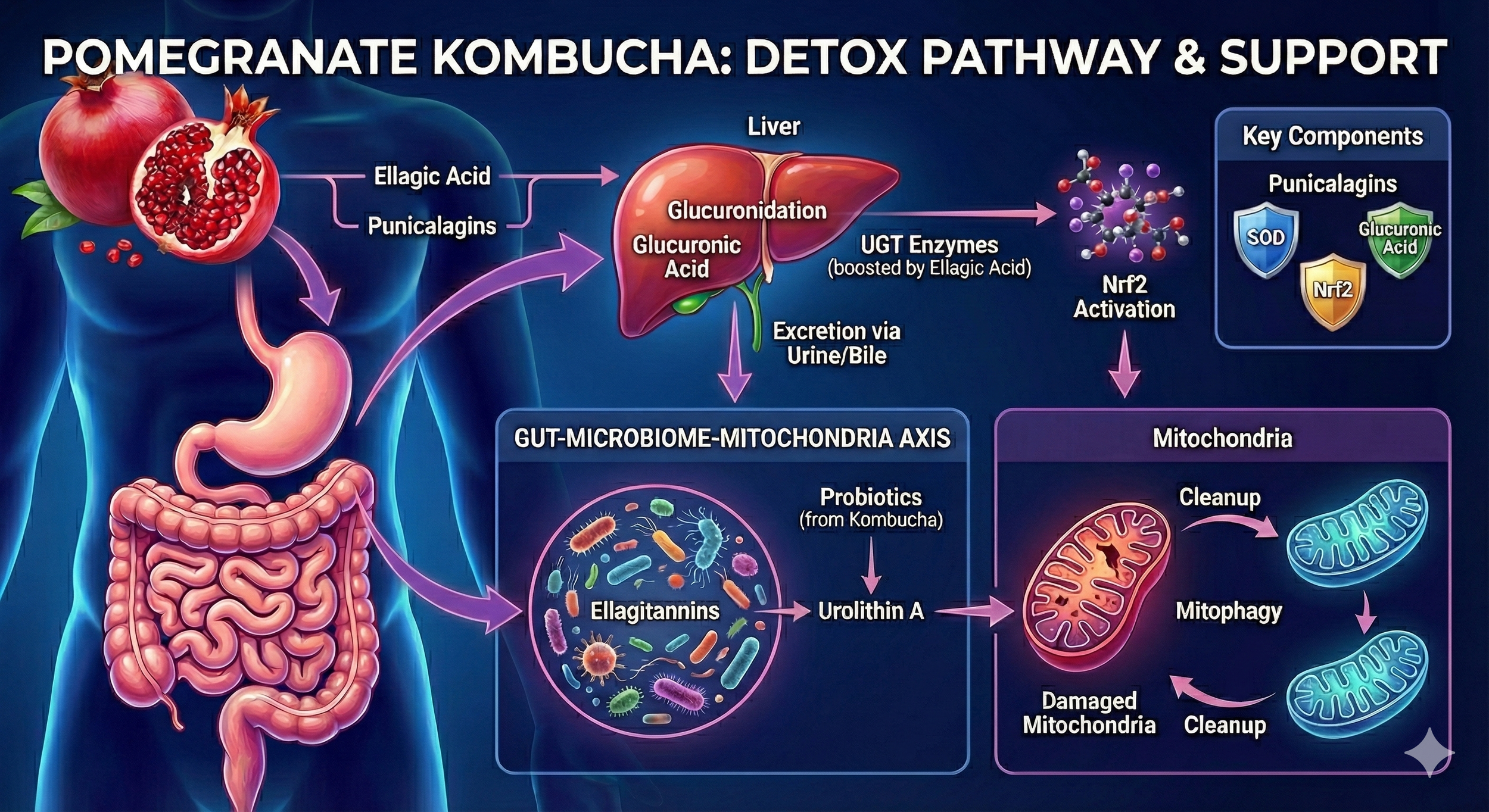
Liver Detox (Phase II): Glucuronic Acid and Ellagic Acid work together to bind toxins, making them water-soluble for easy excretion.
Cellular Defense (Nrf2): Activation of the Nrf2 pathway by antioxidants signals the body to produce protective enzymes (like SOD) to neutralize harmful free radicals.
Gut-Mitochondria Renewal: Ellagitannins metabolized by gut probiotics into Urolithin A, a compound that triggers mitophagy (the clean-up and renewal of old cellular energy generators).
The Biological Process
Step 1: Conjugation
Glucuronic acid molecules bind to free radicals and hydrophobic toxins (like those from microplastics) in the liver.
Step 2: Solubilization
This binding process makes the toxins water-soluble, allowing them to enter the bloodstream safely.
Step 3: Excretion
The now-soluble toxins are efficiently flushed out of the body through urine or bile.
The Impact on Longevity
Reduction of Oxidative Stress
By neutralizing these reactive species, the body prevents cellular damage and inflammation.
Organ Protection
Lower toxic loads reduce the metabolic strain on the liver and kidneys.
Enhanced Longevity
Consistent detoxification supports systemic health and cellular repair over time.
Foods and beverages that have glucuronic acid include:
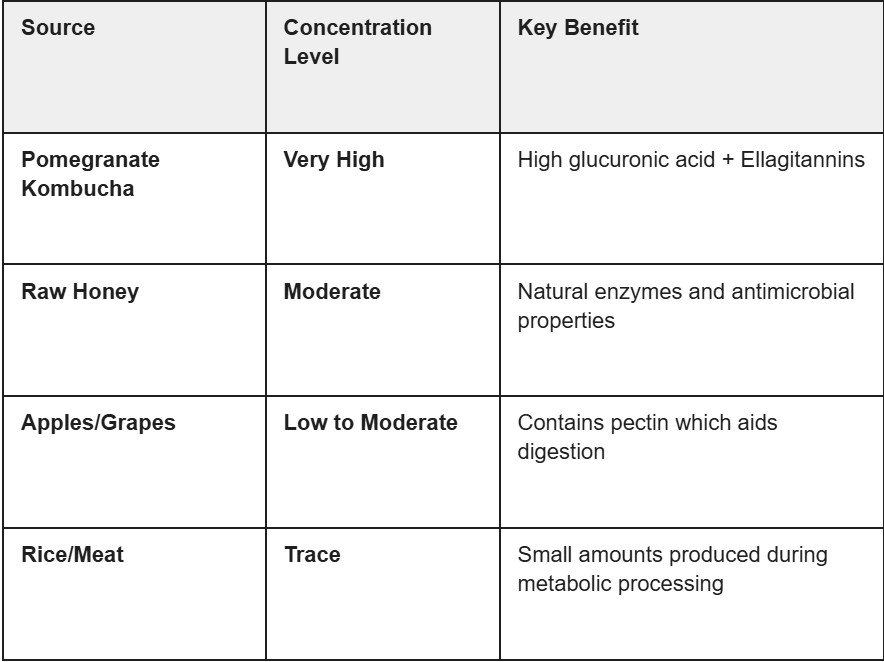
While many food contain glucuronic acid, kombucha tea, especially kombucha made with pomegranate juice contain high levels of glucuronic acid. Pomegranate juice can be utilized during first fermentation and yield a high concentration of glucuronic acid, although many add during the second fermentation.
In my next article I will provide a step by step explanation of how to brew pomegranate kombucha and why adding pomegranate juice in the 1st fermentation is superior. I hope you enjoyed my article, until next time.
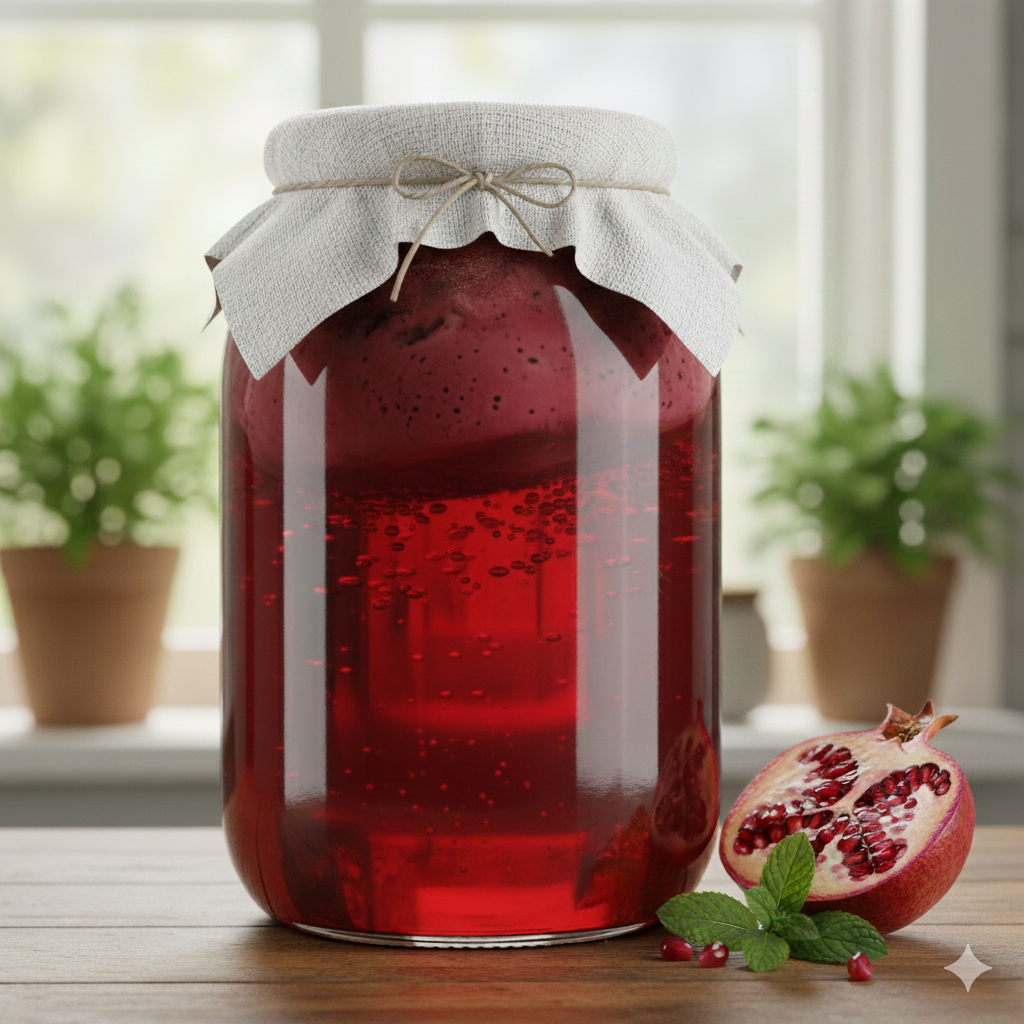
Pomegranate Kombucha
In a standard kombucha, the SCOBY (Symbiotic Culture Of Bacteria and Yeast) converts sugar into ethanol and then into organic acids. Adding pomegranate juice during the 1st fermentation provides a more complex "fuel" for the bacteria.
