How to Brew: Pomegranate Detox Kombucha (F1 Method)
1. The Ingredients
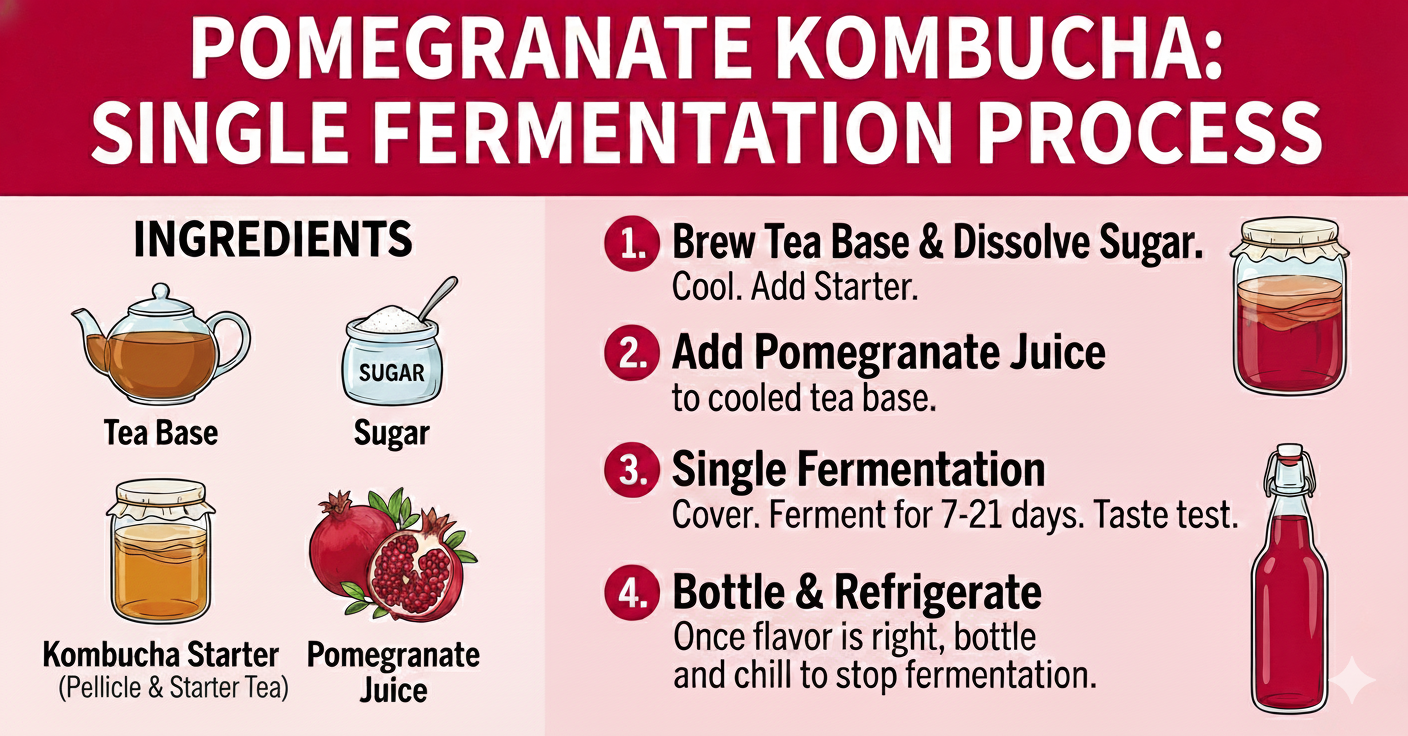
Tea Base: 2 1/2 quarts of filtered water + 4–6 bags of organic black or green tea. You can also use whole leaf tea as well ( 1 cup of water per 1 tbsp of tea leaves is generally how much I use).
Sweetener: 1 cup of organic cane sugar (the fuel for the acid production).
The Powerhouse: 1 cup of 100% pure, unsweetened pomegranate juice.
The Culture: 1 healthy pellicle + 1-2 cups of starter liquid (mature kombucha).
2. The Process
Brew the Base: Steep the tea in two to three cups of boiling water for 10 minutes. Stir in the sugar until dissolved.
The Cooling Phase: Let the tea reach room temperature. Crucial: Never add the SCOBY or pomegranate juice to hot tea, as heat can damage the live cultures and the delicate antioxidants in the juice.
The Blend: In your glass fermentation jar, combine the cooled tea, the pomegranate juice, and the starter liquid.
Introduce the SCOBY: Gently place the pellicle on top. Cover the jar with a breathable cloth secured by a rubber band.
Ferment: Place the jar in a warm, dark spot 21-27 C or (70–80°F). Let it ferment for 7 to 10 days.
3. Why This Works
By the end of F1, the "harsh" sugars in the pomegranate juice have been converted. What remains is a tart, deep-red tonic rich in Glucuronic acid and Urolithin A (a compound produced by gut bacteria from pomegranate that helps with cellular aging).
Why First Fermentation (F1) is Superior
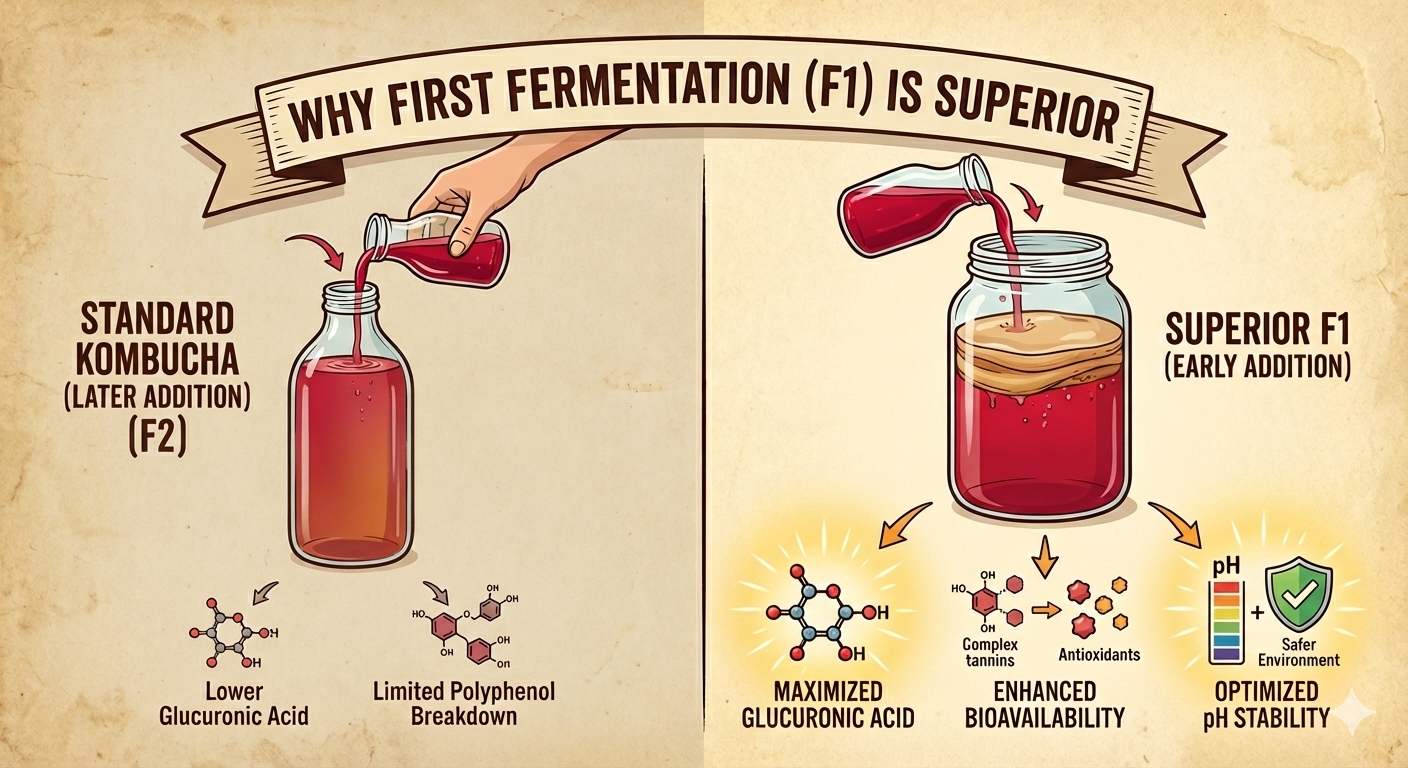
In a standard kombucha, the SCOBY (Symbiotic Culture Of Bacteria and Yeast) converts sugar into ethanol and then into organic acids. Adding pomegranate juice during the primary phase provides a more complex "fuel" for the bacteria.
Microbial Synergy: When pomegranate juice is added in F1, the bacteria have more time to metabolize the specific polyphenols (like punicalagins) found in the fruit. This can actually stimulate the production of Glucuronic acid more effectively than adding it at the end.
Bioavailability: The fermentation process "pre-digests" the pomegranate nutrients. This breaks down complex tannins into smaller, more bioavailable antioxidants that your body can absorb more easily.
pH Stability: Pomegranate is naturally acidic. Adding it early helps lower the starting pH, which creates a safer environment for the beneficial bacteria to thrive and produce those health-promoting metabolites.
