The Science of the Sip: Unlocking the "Ruby Red" Synergy
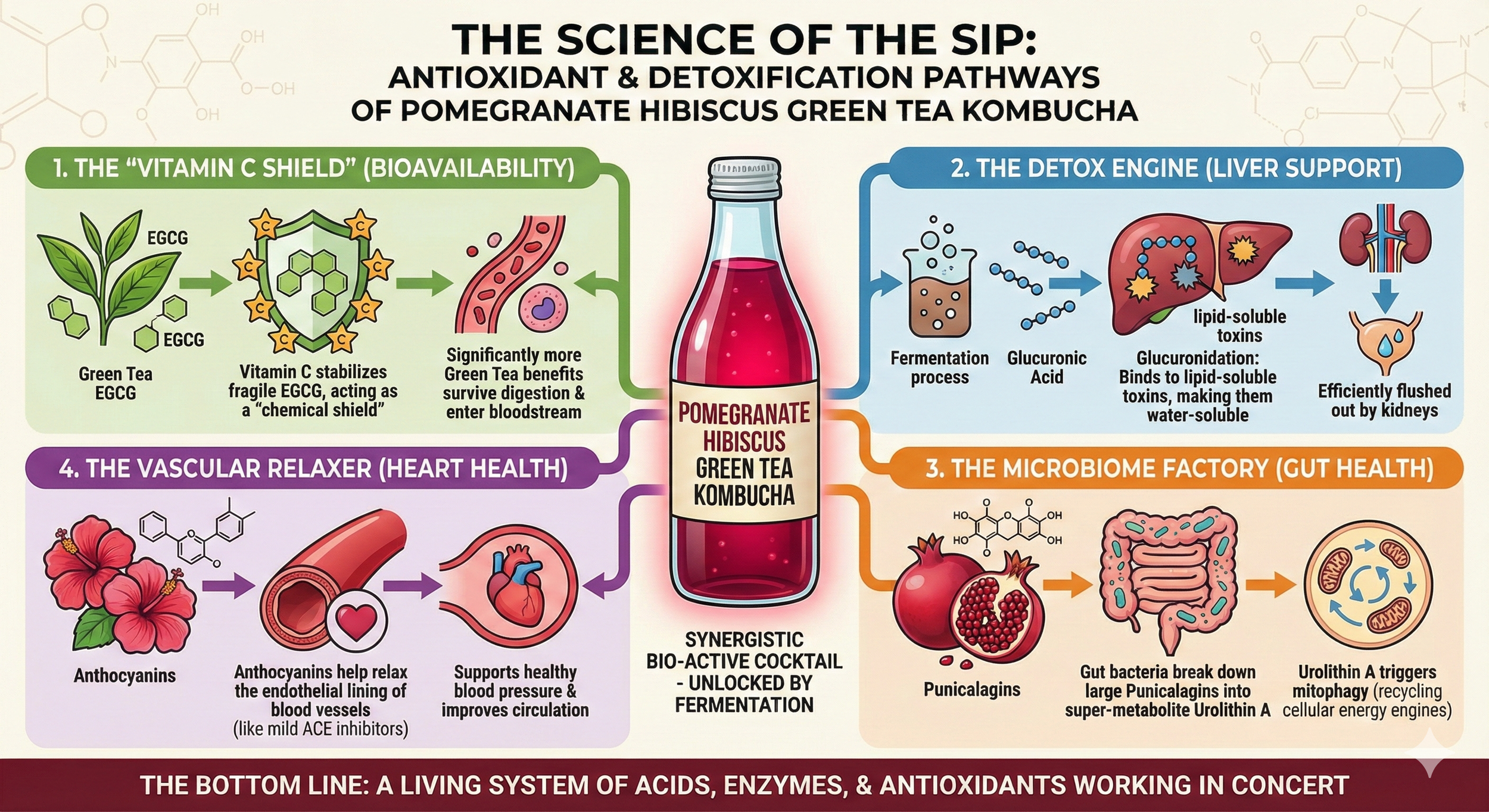
We didn't just choose Pomegranate, Hibiscus, and Green Tea because they taste incredible together (though the tart-sweet balance is undeniable). We chose them because, chemically speaking, they are best friends.
In the world of biochemistry, specific compounds work better when they have a partner. This is called synergy.
When you drink Pomegranate Hibiscus Green Tea Kombucha, you aren't just getting three separate ingredients; you are drinking a bio-active cocktail where the fermentation process has unlocked the full potential of every antioxidant.
Here is the deep dive into what is happening inside your bottle—and your body.
1. The "Vitamin C Shield" (Bioavailability)
Green tea is famous for EGCG (Epigallocatechin gallate), a powerful antioxidant known for supporting metabolism and brain health.
The problem? EGCG is fragile. It oxidizes easily in the gut before your body can fully absorb it.
The Solution: Pomegranate and Hibiscus are naturally rich in Vitamin C and citric acid. By brewing them together, the Vitamin C acts as a "chemical shield," stabilizing the EGCG molecules. This means significantly more of the green tea's benefits actually survive digestion and make it into your bloodstream.
2. The Detox Engine (Liver Support)
You’ve heard kombucha is "detoxifying," but how does that actually work? It comes down to one specific organic acid produced during fermentation: Glucuronic Acid.
Think of Glucuronic Acid as a sticky trap. In your liver, it undergoes a process called glucuronidation, where it binds to lipid-soluble toxins (like metabolic waste or environmental pollutants) and makes them water-soluble. This allows your kidneys to flush them out safely and efficiently.
3. The Microbiome Factory (Gut Health)
Pomegranates contain massive antioxidant molecules called Punicalagins. These are actually too large for your body to absorb directly. This is where your gut bacteria come in.
Specific beneficial bacteria in your microbiome feast on these Punicalagins and break them down into a super-metabolite called Urolithin A. Urolithin A is currently being studied for its ability to trigger mitophagy—the recycling of old, defective cellular energy engines (mitochondria) into new, efficient ones.
4. The Vascular Relaxer (Heart Health)
The deep red color of this brew comes from Anthocyanins found in the Hibiscus flower.
Beyond their beautiful color, Anthocyanins are scientifically shown to help support healthy blood pressure. They function similarly to mild ACE inhibitors, helping to relax the endothelial lining of your blood vessels and improve circulation.
The Bottom Line
When we say "live culture," we mean it. This isn't just a soda substitute; it's a living system of acids, enzymes, and antioxidants working in concert.
Drink it for the tart, floral flavor. Love it for the biology.
